Rough Country Vertex Shock Settings: A Comprehensive Guide
Today’s date is 05/05/2026 04:28:41. This guide details settings for Chevy/GMC 1500, Jeep Wrangler JL/JLU, and Can-Am Defender models.
Rough Country Vertex shocks represent a significant advancement in off-road suspension technology, designed to elevate both on- and off-road performance. These shocks aren’t simply replacements; they’re complete systems engineered for enhanced control and comfort. Vertex shocks cater to a diverse range of vehicles, including the Chevy/GMC 1500 (2007-2018), Jeep Wrangler JL/JLU, and Can-Am Defender models, offering tailored solutions for various lift heights and driving styles.
The core of the Vertex system lies in its ability to provide a smoother, more controlled ride, even under demanding conditions. Whether you’re navigating rocky trails or cruising on the highway, these shocks aim to minimize body roll, reduce fade, and maximize articulation. Understanding the specific settings for your vehicle and intended use is crucial to unlocking the full potential of your Vertex shocks, and this guide will help you do just that.
Understanding Vertex Shock Technology
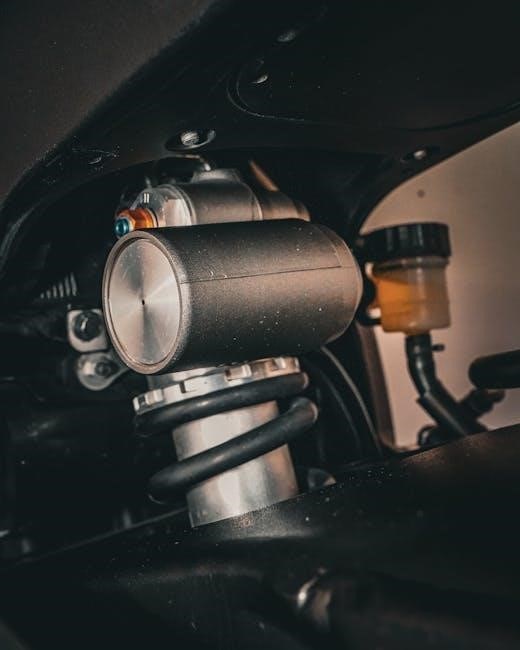
Rough Country Vertex shocks utilize a sophisticated monotube design, a key component in their superior performance. Unlike traditional twin-tube shocks, monotube shocks separate the oil and nitrogen chambers, preventing oil aeration and maintaining consistent damping characteristics. This design, coupled with a nitrogen-charged system, significantly reduces shock fade, especially under heavy loads or prolonged use.
The inclusion of remote reservoirs further enhances performance by increasing oil capacity and dissipating heat more effectively. This is particularly beneficial during aggressive off-road driving where shocks are subjected to extreme temperatures. The adjustable damping allows for fine-tuning of both compression and rebound, enabling drivers to customize the ride to match their vehicle’s lift height, weight, and terrain. This technology delivers a balanced and controlled ride experience.
Key Features of Rough Country Vertex Shocks
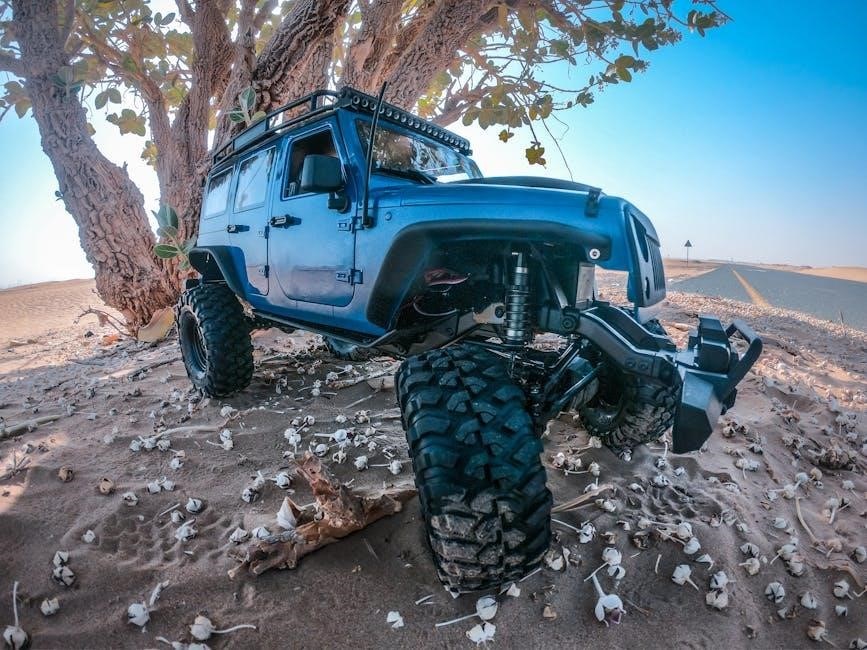
Rough Country Vertex shocks boast several defining features contributing to their enhanced performance and durability. The core of their design lies in the monotube construction, offering consistent damping and preventing oil aeration. A nitrogen-charged system ensures reduced shock fade, maintaining responsiveness even under demanding conditions.
Furthermore, many Vertex shocks incorporate a remote reservoir, increasing oil capacity for superior heat dissipation and sustained performance during intense off-road use. These shocks are specifically engineered for various vehicle applications, including Chevy/GMC 1500s, Jeep Wranglers, and Can-Am Defenders, offering tailored solutions for lift heights ranging from 2 to 7.5 inches. Adjustable damping provides customizable ride control.
Monotube Design and Benefits
The Rough Country Vertex shocks utilize a monotube design, a significant advancement over traditional twin-tube shocks. This construction features a single cylinder housing both the piston and the pressurized nitrogen chamber. A key benefit is consistent performance; the separation of oil and nitrogen prevents aeration, maintaining damping characteristics even during prolonged, strenuous activity.
This design also contributes to improved heat dissipation, as the larger oil volume allows for more efficient thermal management. The result is reduced shock fade and a more predictable, controlled ride, regardless of terrain or load. Monotube shocks offer a more responsive feel and enhanced durability compared to conventional designs, making them ideal for lifted vehicles and off-road applications.
Nitrogen-Charged System Explained

Rough Country Vertex shocks employ a nitrogen-charged system to enhance performance and consistency. Nitrogen gas is used because it’s inert, meaning it won’t absorb into the shock oil like air can. This prevents cavitation – the formation of bubbles – which leads to inconsistent damping and reduced shock effectiveness.
The pressurized nitrogen creates a floating piston within the shock body, actively pushing against the oil. This ensures immediate response and maintains consistent pressure, even under heavy loads or during aggressive driving. The result is reduced shock fade, improved handling, and a more comfortable ride. This system contributes significantly to the Vertex shocks’ ability to withstand demanding conditions and deliver reliable performance.
Remote Reservoir Advantages
Remote reservoir shocks, like those found in the Rough Country Vertex series, offer significant advantages over traditional shock designs. The primary benefit is increased oil capacity. This larger volume of oil allows for greater heat dissipation, preventing the shock oil from breaking down and losing its damping properties during extended use or strenuous activity.
The remote reservoir is connected to the main shock body via a flexible hose, allowing it to be positioned away from heat sources like brakes and exhaust components. This further aids in temperature regulation. Consequently, the shocks maintain consistent performance for longer periods, reducing shock fade and ensuring predictable handling. This is crucial for off-road enthusiasts and those who frequently tow or haul heavy loads.
Applications of Vertex Shocks
Rough Country Vertex shocks are engineered for a diverse range of vehicles, enhancing both on- and off-road performance. A popular application is with the Chevy/GMC 1500 (2007-2018 Classic), where the 2.5 Remote Reservoir Leveling Coilovers provide a 2-inch lift and improved handling.
Jeep Wrangler JL/JLU owners frequently utilize Vertex shocks (models 68008 front, 69009R/L rear) for 2-3 inch lifts, extending droop by approximately 1.5 inches without requiring extended bump stops. Furthermore, the Can-Am Defender HD5/HD8/HD9/HD10 benefits from Vertex Coilover Shocks, offering adjustable damping and a 0-2 inch lift for superior off-road capability. Vertex 2.5 Reservoir Coilovers are also available for 6-7.5 inch lifts and 5-7.5 inch lifts.
Vertex Shocks for Chevy/GMC 1500 (2007-2018)
For Chevy/GMC 1500 trucks spanning the 2007-2018 model years (Classic body style), Rough Country Vertex 2.5 Remote Reservoir Leveling Coilovers are a prime upgrade. These coilovers deliver a 2-inch lift, immediately improving stance and allowing for slightly larger tire sizes.
The complete front coilover set includes both driver and passenger side components, ensuring balanced performance and predictable handling. Key features include a monotube design for consistent shock absorption and a nitrogen-charged system to minimize shock fade, even under heavy loads. These shocks are designed to enhance ride quality and capability, whether for daily driving or light off-roading. Proper installation is crucial for optimal performance.
Vertex Shocks for Jeep Wrangler JL/JLU
Rough Country Vertex shocks are a popular upgrade for Jeep Wrangler JL and JLU models, enhancing both on-road comfort and off-road performance. Specifically, models 68008 (front) and 69009R/L (rear) are designed for a 2-3 inch lift. These shocks notably extend droop by approximately 1.5 inches at both the front and rear, improving articulation without necessitating extended bump stops.
Owners report significant improvements in ride quality and handling after installation. The Vertex series utilizes monotube construction and nitrogen charging for consistent damping and reduced fade. These shocks are suitable for various Wrangler trims, including Rubicon, 4xe, 392, Sahara, and Sport. Careful consideration of lift height and vehicle weight is recommended for optimal settings.
Vertex Shocks for Can-Am Defender Models
Rough Country Vertex coilover shocks are engineered to significantly enhance the performance of Can-Am Defender HD5, HD8, HD9, and HD10 models. These shocks offer adjustable damping, allowing riders to fine-tune the suspension for varying terrain and load conditions. They provide a 0-2 inch lift capability, increasing ground clearance and improving overall capability.
The Vertex series for Defenders is built with rugged durability in mind, designed to withstand the demands of challenging off-road adventures. Adjustable settings enable customization for optimal handling whether hauling cargo, navigating trails, or simply enjoying a smoother ride. These coilovers are a direct upgrade, improving both comfort and control for your Can-Am Defender.
Determining the Correct Shock Settings
Establishing the ideal Rough Country Vertex shock settings requires careful consideration of several key factors. Lift height is paramount; shocks are specifically tuned for particular lift ranges (2-3″, 5-7.5″, 6-7.5″). Vehicle weight, including passengers, cargo, and accessories, significantly impacts performance – heavier loads necessitate firmer damping.
Your driving style and the terrain you frequent are also crucial. Aggressive off-road driving demands more robust damping than casual on-road use. Rocky trails require different settings than smooth dirt roads. Begin with the manufacturer’s recommended settings for your specific setup and incrementally adjust from there, documenting changes to find the optimal balance between comfort and control.
Lift Height Considerations
Rough Country Vertex shocks are engineered for specific lift heights, and selecting the correct setting is critical for optimal performance and ride quality. For a 2-3 inch lift, models 68008 (front) and 69009R/L (rear) are designed to extend droop by approximately 1.5 inches without requiring extended bump stops.
Higher lifts, such as 5-7.5 inches and 6-7.5 inches, require model-specific shocks – Vertex 2.5 Reservoir shocks are available for these ranges. Mismatched lift height and shock settings can lead to bottoming out, reduced articulation, or compromised handling. Always verify compatibility and consult the Vertex shock PDF manual for precise recommendations based on your vehicle’s lift configuration.
Vehicle Weight and Load Capacity
The weight of your vehicle, including passengers, cargo, and aftermarket accessories, significantly impacts shock performance. Rough Country Vertex shocks, featuring a nitrogen-charged system, are designed to reduce shock fade under heavy loads. However, exceeding the vehicle’s Gross Vehicle Weight Rating (GVWR) will compromise handling and safety, regardless of shock quality.

For vehicles frequently carrying substantial weight – such as those used for towing or off-roading with gear – consider stiffer damping settings. The Vertex shocks’ adjustable damping allows for customization to maintain control and stability. Refer to the Vertex shock PDF manual for guidance on adjusting settings based on typical load conditions and ensure optimal performance.
Driving Style and Terrain
Your driving style and the terrain you frequently encounter are crucial factors in determining optimal Rough Country Vertex shock settings. Aggressive off-road driving demands a different setup than primarily highway cruising. For rocky or uneven terrain, softer compression damping can improve articulation and ride comfort, while increased rebound damping enhances control.

Conversely, high-speed driving or smooth surfaces benefit from firmer settings to minimize body roll and maintain stability. The Vertex shocks’ remote reservoir design helps prevent overheating during demanding use. Consult the Vertex shock PDF manual for specific recommendations based on your typical driving conditions and preferences, tailoring the shocks to your unique needs.
Front Shock Settings Guide
Referencing the Vertex shock PDF manual is essential for precise adjustments. For Chevy/GMC 1500s and Jeep Wrangler JL/JLUs with a 2-3 inch lift, utilize model 68008. These shocks provide approximately 1.5 inches of extended droop without requiring extended bump stops. For lifts ranging from 5-7.5 inches, consult model-specific documentation, as settings vary considerably based on lift height and vehicle weight.
Additionally, 6-7.5 inch lift configurations require dedicated model numbers (refer to the PDF). Remember that these are starting points; fine-tuning is necessary based on individual vehicle characteristics and driving preferences. Always prioritize safety and consult a professional if unsure about proper adjustment procedures.
2-3 Inch Lift Settings (Model 68008)
When utilizing Rough Country Vertex shocks – model 68008 – for a 2-3 inch lift, initial settings are crucial for optimal performance. These shocks are designed to extend vehicle droop by approximately 1.5 inches at the front, enhancing off-road capability without necessitating extended bump stops. The PDF manual details baseline compression and rebound damping settings suitable for typical road and trail conditions.
Begin with the manufacturer’s recommended settings as a starting point. Subsequent adjustments should be made incrementally, based on observed vehicle behavior. Monitor for signs of shock fade or harshness, and adjust damping accordingly. Remember to document all changes for future reference and consistent performance.

5-7.5 Inch Lift Settings (Model Specific)
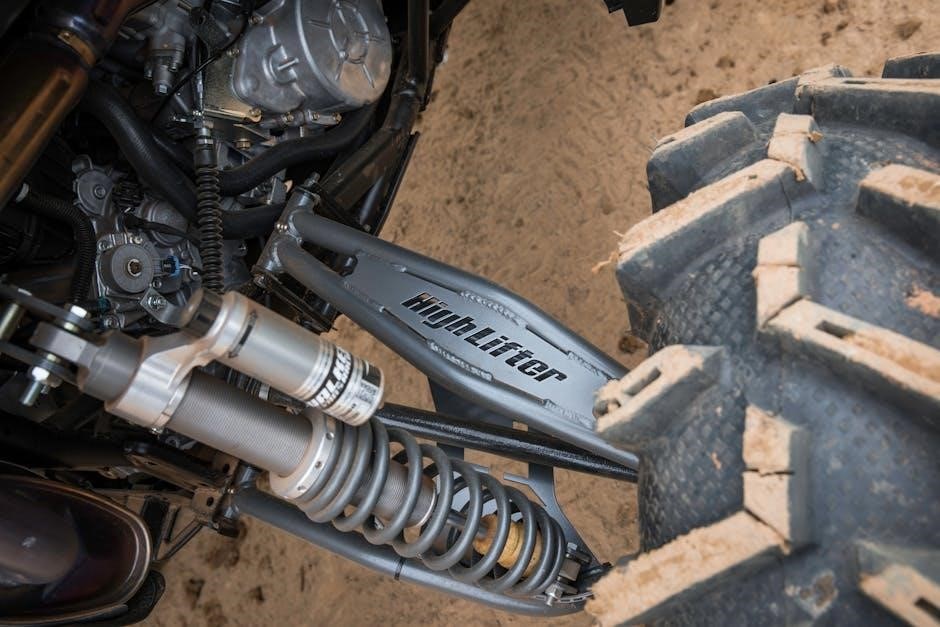
For vehicles equipped with a 5-7.5 inch lift, utilizing the correct Rough Country Vertex shock model is paramount. The PDF manual provides specific recommendations based on the exact lift height and vehicle configuration. Vertex 2;5 Reservoir Front Shocks are available for this lift range, offering increased damping capacity to control larger suspension travel.
Initial settings will differ significantly from those used for lower lifts. The manual outlines suggested compression and rebound damping values, but fine-tuning is essential. Pay close attention to body roll during cornering and bottoming-out during off-road excursions. Adjust damping incrementally to achieve a balanced ride and optimal control, documenting each change for future reference.
6-7.5 Inch Lift Settings (Model Specific)
When operating with a 6-7.5 inch lift, the Rough Country Vertex shock settings require precise adjustment for optimal performance. The downloadable PDF manual is crucial, detailing model-specific configurations. Vertex 2.5 Reservoir Coilovers are designed for this lift range, providing enhanced control and stability during demanding conditions.
Begin with the manufacturer’s baseline settings as a starting point, found within the PDF. Focus on minimizing body roll and maximizing articulation. Incremental adjustments to both compression and rebound damping are key. Monitor for signs of shock fade or harshness, indicating the need for further refinement. Remember to document all changes to easily revert to previous settings if necessary, ensuring a comfortable and controlled ride.
Rear Shock Settings Guide
The Rough Country Vertex rear shocks, specifically model 69009R/L for a 2-3 inch lift, are designed to enhance stability and control. Refer to the comprehensive PDF manual for detailed instructions and model-specific recommendations. Understanding adjustable damping is vital for tailoring the shocks to your vehicle’s load and driving style.
Initial settings should prioritize a balanced ride, avoiding excessive bounce or harshness. The PDF outlines baseline compression and rebound settings. Adjustments should be made incrementally, observing the vehicle’s behavior under various conditions. Heavier loads necessitate increased compression damping to prevent bottoming out, while reduced rebound damping can improve traction. Careful tuning, guided by the PDF, ensures optimal rear suspension performance.
2-3 Inch Lift Settings (Model 69009R/L)

For vehicles with a 2-3 inch lift utilizing Rough Country Vertex rear shocks (model 69009R/L), the initial settings detailed in the official PDF manual are crucial. These shocks extend droop by approximately 1.5 inches, potentially negating the need for extended bump stops. Begin with a moderate compression damping setting – typically around the middle of the adjustment range – to provide a balanced ride.
Rebound damping should also start in the mid-range. The PDF provides specific click positions for both compression and rebound. Fine-tune these settings based on observed vehicle behavior. If experiencing excessive bouncing, increase rebound damping. If the ride feels harsh, decrease it. Always consult the PDF for detailed guidance and safety precautions during adjustment.
Adjustable Damping Explained
Rough Country Vertex shocks feature adjustable damping, allowing customization of ride quality and performance. The PDF manual details how to modify both compression and rebound damping. Compression damping controls the rate at which the shock absorbs impacts – higher settings stiffen the ride over bumps, while lower settings provide more compliance. Rebound damping governs how quickly the shock extends after compression; excessive rebound can cause a bouncy ride, while insufficient rebound can lead to a harsh bottoming-out sensation.
Understanding these principles, as outlined in the PDF, is key to optimal setup. Adjustments are typically made via knobs or dials on the shock body, with click positions indicating the degree of damping. Small adjustments can yield noticeable results, so methodical tuning is recommended.
Adjusting Damping Settings
The Rough Country Vertex shocks PDF manual provides detailed instructions for adjusting damping. Begin by establishing a baseline setting – often the middle position – and then make incremental changes. It’s crucial to adjust one setting at a time, noting the impact on vehicle handling. The manual emphasizes that adjustments should be made on a consistent stretch of road or trail to accurately assess the changes.
Remember that damping adjustments affect both on-road comfort and off-road control. Stiffer settings enhance stability during aggressive maneuvers, while softer settings improve ride quality on rough terrain. Refer to the PDF for specific recommendations based on your vehicle’s lift height and intended use.
Compression Damping Adjustment
The Rough Country Vertex shocks PDF manual details compression damping control, influencing how quickly the shock absorbs impacts. Increasing compression damping stiffens the initial shock travel, beneficial for high-speed driving or heavily loaded vehicles, minimizing body roll and dive. Conversely, reducing compression damping allows for quicker initial movement, improving articulation over rocks and absorbing smaller bumps more comfortably.
Adjustments are typically made via an external knob or adjuster. The manual advises starting with a few clicks from the center position and testing. Monitor for harshness or a lack of control. Incremental changes are key; avoid large adjustments. Remember, compression damping directly impacts how the shock reacts to bumps and impacts, influencing overall vehicle control.
Rebound Damping Adjustment
The Rough Country Vertex shocks PDF manual explains that rebound damping controls the speed at which the shock extends after compression. Increasing rebound damping slows extension, preventing a bouncy ride and maintaining tire contact on uneven terrain. Decreasing rebound damping allows for faster extension, improving comfort on smoother surfaces but potentially leading to a less controlled feel over larger obstacles.
Like compression, adjustments are made externally. Begin with a baseline setting near the center and incrementally adjust. Too much rebound can cause a harsh, packed-in feeling, while too little can result in excessive bouncing. Proper rebound control is crucial for maintaining stability and maximizing traction, especially during off-road adventures. Consult the manual for specific recommendations.
Troubleshooting Common Issues
The Rough Country Vertex shocks PDF manual addresses several potential problems. Shock fade and overheating can occur during prolonged, strenuous use, diminishing performance. Ensure proper heat dissipation and consider upgrading to a larger reservoir if consistently experiencing this. Harsh ride quality often stems from incorrect damping settings; experiment with softer compression and rebound adjustments.

Noise and vibration might indicate a loose mounting bolt or internal component issue. Thoroughly inspect all hardware and contact Rough Country support if the problem persists. Regularly check for leaks, which signal a potential seal failure. Remember, proper shock maintenance, as outlined in the manual, is key to preventing these issues and maximizing longevity.
Shock Fade and Overheating
The Rough Country Vertex shocks PDF manual details that shock fade, a loss of damping effectiveness, often results from prolonged, intense use causing the shock fluid to overheat. Nitrogen-charged systems help mitigate this, but aren’t foolproof. Consistent, demanding off-road driving or heavy loads exacerbate the issue.
Overheating reduces the viscosity of the shock oil, leading to diminished control and a spongy feel. To combat this, consider the remote reservoir option, which increases fluid capacity and heat dissipation. Regularly inspect shocks for signs of excessive heat. Adjusting driving style or incorporating cooling periods can also help prevent fade, as detailed within the manual’s maintenance section.
Harsh Ride Quality
The Rough Country Vertex shocks PDF manual addresses harsh ride quality, often stemming from incorrect damping settings for your vehicle’s lift height and load; Overly stiff compression damping transmits more road imperfections to the cabin, while excessive rebound can cause a bouncy, unsettled feel.
Refer to the guide for model-specific recommendations (e.g., 68008 for 2-3” lift, 69009R/L for similar heights). Experiment with small adjustments to both compression and rebound damping – detailed in the manual – to find the optimal balance. Ensure settings align with your driving style and typical terrain. Incorrect settings can amplify vibrations and reduce overall comfort, so methodical adjustment is key.
Noise and Vibration
The Rough Country Vertex shocks PDF manual details potential causes of noise and vibration, often linked to improper installation or shock component interaction. Check for secure mounting hardware and ensure no components are contacting the vehicle frame or suspension parts. Verify correct bushings are used and in good condition.
Internal shock valving issues, though rare, can also contribute. If noise persists after verifying installation, consult the manual’s troubleshooting section or contact Rough Country support. Adjusting damping settings – compression and rebound – can sometimes mitigate vibrations, but excessive adjustment isn’t recommended. Always refer to model-specific settings (like those for 68008 or 69009R/L) as a starting point.
Finding the Vertex Shock PDF Manual
The Rough Country Vertex shock settings PDF manual is your primary resource for detailed information. You can directly access it through the Rough Country website – navigate to the “Support” or “Resources” section, then search for “Vertex Shocks.” Utilize the model number (e.g., 68008, 69009R/L) for a precise match.
Alternatively, a general search online using terms like “Rough Country Vertex Shock Manual” will yield results. Ensure the document corresponds to your specific shock model and vehicle application (Chevy/GMC 1500, Jeep Wrangler JL/JLU, or Can-Am Defender). The PDF contains crucial installation instructions, recommended settings for various lift heights, and troubleshooting guidance. Always download the latest version for accuracy.
Resources for Additional Information
Beyond the official Rough Country Vertex shock settings PDF manual, several online communities offer valuable insights. Jeep Wrangler Forums (JL / JLU) – specifically JLwranglerforums.com – features dedicated threads discussing Vertex shock installations and real-world performance feedback. Users often share their preferred settings for 2-3 inch lifts (using models 68008 & 69009R/L) and experiences.
Rough Country’s customer support team is also a readily available resource. Their website provides contact information for phone and email assistance. Furthermore, YouTube channels specializing in off-road vehicle modifications frequently showcase Vertex shock installations and adjustments. Remember to cross-reference information and prioritize the official manual for accurate guidance.
Safety Precautions When Adjusting Shocks
Prioritize safety when modifying your Rough Country Vertex shocks. Always consult the official Vertex shock settings PDF manual before making any adjustments. Ensure the vehicle is parked on a level surface with the parking brake firmly engaged. Use appropriate jack stands to securely support the vehicle – never work under a vehicle supported only by a jack.
Wear safety glasses to protect your eyes. Avoid making drastic changes to damping settings; incremental adjustments are recommended. After each adjustment, test the vehicle in a controlled environment to assess the impact on handling and stability. If you’re unsure about any procedure, seek assistance from a qualified mechanic. Incorrect adjustments can compromise vehicle safety.