Article Plan: Gym Ball Exercises for Back Pain (PDF Focus)
This PDF guide details gym ball exercises, a Pilates alternative, to combat the global rise in back pain—affecting 619 million in 2020—caused by sedentary lifestyles․
Lower back pain has reached epidemic proportions, impacting millions globally․ The World Health Organization (WHO) reported 619 million individuals suffered from it in 2020, a figure steadily increasing with modern lifestyles․ This isn’t merely a spinal issue, as lifestyle coach Luke Coutinho suggests, but a complex interplay of factors․
Prolonged sitting, poor posture at desks, and stressful routines are major contributors, even among those regularly attending gyms․ Ignoring back pain is detrimental; it’s often perceived as a normal part of life, yet requires proactive solutions․ This PDF guide introduces gym ball exercises as an accessible and effective alternative to traditional Pilates․
Gym balls offer a versatile way to engage core muscles, stabilize the spine, and alleviate tension․ They challenge the entire body, promoting strength and flexibility, making them ideal for both prevention and rehabilitation of back pain․
Understanding Lower Back Pain
Lower back pain is a widespread ailment, often stemming from a combination of physical and lifestyle factors․ As highlighted by recent data, it affected a staggering 619 million people worldwide in 2020, demonstrating its global prevalence․ Understanding the root causes is crucial for effective management and prevention․
Common culprits include prolonged sitting, which increases disc pressure, weakens back muscles, and tightens hamstrings․ Poor posture exacerbates these issues, reducing core stability․ Furthermore, stress contributes significantly by inducing muscle tension․ These factors create a vicious cycle, leading to chronic discomfort;
Recognizing these underlying mechanisms is the first step towards utilizing targeted exercises, like those featured in this PDF, to restore proper biomechanics and alleviate pain․
Prevalence of Lower Back Pain (Global Statistics ― WHO Data)
The World Health Organization (WHO) data reveals a concerning global trend: lower back pain is remarkably common․ In 2020 alone, an estimated 619 million people worldwide were affected by this debilitating condition․ This statistic underscores the significant public health impact and the urgent need for accessible, effective solutions․
This widespread prevalence isn’t limited to specific demographics; it impacts individuals across age groups and lifestyles․ The rise in sedentary jobs, coupled with increased stress levels, contributes to this growing number․ This PDF guide aims to provide a practical, preventative approach to managing and reducing back pain․
Understanding these statistics emphasizes the importance of proactive measures, such as incorporating gym ball exercises into a regular routine․
Common Causes of Lower Back Pain
Lower back pain stems from a multitude of factors, often interconnected․ Prolonged sitting dramatically increases disc pressure, simultaneously weakening back extensors and tightening hamstrings․ This imbalance significantly reduces core stability, a crucial element in spinal support․ Modern lifestyles, characterized by desk jobs and limited physical activity, exacerbate these issues․
Poor posture further compounds the problem, placing undue stress on the spine․ Stress itself contributes by inducing muscle tension, creating a vicious cycle of pain and discomfort․ Even regular gym-goers aren’t immune, as improper form or overexertion can lead to injury․
This PDF guide addresses these root causes through targeted gym ball exercises․
The Role of Lifestyle in Back Pain
Modern lifestyles significantly contribute to the escalating rates of back pain․ Sedentary habits, particularly prevalent in desk jobs, create a cascade of negative effects․ Hours spent sitting increase disc pressure, weaken crucial back muscles, and tighten hamstrings, diminishing core stability․ This physical inactivity fosters muscle imbalances and postural problems․
Poor posture, a common consequence of prolonged sitting, adds further strain to the spine․ Simultaneously, chronic stress induces muscle tension, exacerbating pain and hindering recovery․ The combination of these factors explains why back pain is increasingly common, even among those who regularly exercise․
This PDF will demonstrate how gym ball exercises can counteract these lifestyle-induced issues․
Sedentary Lifestyles & Desk Jobs
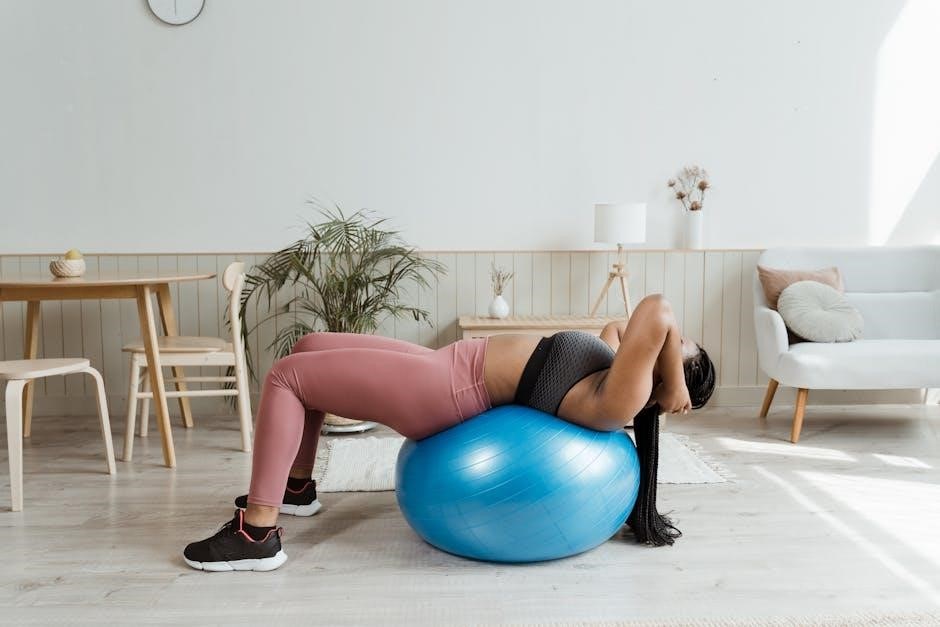
Prolonged sitting, characteristic of many desk jobs, is a primary driver of lower back pain; This inactivity dramatically increases pressure on spinal discs, leading to potential damage and discomfort․ Simultaneously, back extensor muscles weaken from lack of use, reducing spinal support․ Hamstrings tighten, restricting movement and contributing to postural imbalances․
The resulting reduced core stability leaves the spine vulnerable to injury and pain․ This creates a vicious cycle: pain discourages movement, further weakening muscles and exacerbating the problem․ This PDF will highlight how gym ball exercises directly address these issues, offering a proactive solution․
Counteracting these effects is crucial for maintaining spinal health․
Poor Posture & Its Impact
Incorrect posture, often stemming from prolonged sitting or screen time, significantly contributes to lower back pain․ Slouching or hunching forward places undue stress on the spine, disrupting its natural alignment and leading to muscle imbalances․ This misalignment forces certain muscles to overwork while others become weakened and inactive․
The PDF will demonstrate how gym ball exercises actively promote proper spinal alignment and strengthen core muscles responsible for maintaining good posture․ By engaging these muscles, individuals can counteract the negative effects of poor posture and reduce strain on the lower back․
Correcting postural habits is vital for long-term pain relief and prevention․
Stress & Muscle Tension as Contributors
Chronic stress is a frequently overlooked, yet significant, contributor to lower back pain․ When stressed, the body often responds with muscle tension, particularly in the neck, shoulders, and back․ This sustained tension can lead to muscle spasms, restricted movement, and increased pain sensitivity․
The PDF will highlight how gym ball exercises can serve as a valuable tool for stress reduction and muscle relaxation․ The gentle, controlled movements encourage mindful breathing and promote the release of endorphins, natural mood boosters and pain relievers․

By incorporating these exercises, individuals can address both the physical and psychological aspects of back pain․
Why Gym Balls are Effective for Back Pain
Gym balls offer a unique approach to back pain relief, functioning as an underrated yet effective alternative to traditional Pilates․ Their inherent instability demands constant core engagement, fostering stabilization and strengthening crucial back muscles․ This dynamic challenge surpasses static exercises, promoting functional strength․
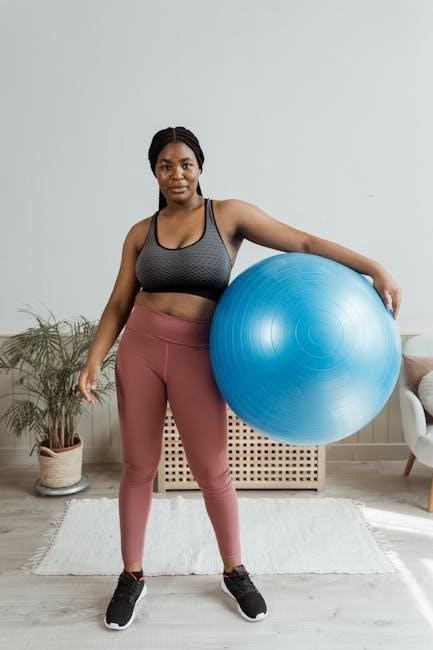
The PDF will detail how the ball’s versatility allows for a wide range of exercises targeting various muscle groups involved in back support․ Accessibility is another key benefit; gym balls are relatively inexpensive and require minimal space․
This makes them ideal for home-based rehabilitation programs, empowering individuals to proactively manage their pain․
Gym Balls as a Pilates Alternative
The PDF will highlight how gym balls effectively mimic the core-challenging principles of Pilates, offering a comparable workout experience․ Like Pilates, gym ball exercises emphasize controlled movements and mindful engagement of stabilizing muscles․ They challenge the core, shoulders, arms, and back in a similar fashion․
However, gym balls provide a different sensory experience, requiring continuous adjustments to maintain balance․ This heightened proprioceptive demand can be particularly beneficial for individuals with back pain, improving body awareness and control․
The guide will showcase exercises like standing roll downs and spine stretch forwards, adapted for the gym ball, to lengthen the spine and alleviate discomfort․
Core Engagement & Stabilization
The PDF will deeply explore how gym ball exercises inherently demand significant core engagement for stability․ Unlike floor exercises, the unstable surface of the ball forces constant activation of abdominal and back muscles to maintain proper form and prevent falls․
This continuous core work is crucial for individuals with back pain, as a strong core provides essential support for the spine, reducing strain and improving posture․ The guide will detail how exercises target deep core muscles often neglected in traditional workouts․
Exercises will focus on improving core stability, balance, and overall strength, addressing common issues contributing to lower back discomfort․
Versatility & Accessibility
The PDF will highlight the gym ball’s remarkable versatility as a fitness tool, functioning as an effective Pilates alternative․ It can be incorporated into a wide range of exercises, catering to varying fitness levels – from beginner pelvic tilts to advanced pike variations․
Accessibility is a key benefit; gym balls are relatively inexpensive and readily available, making them a practical solution for home-based rehabilitation and preventative care․ The guide will emphasize this affordability․
The PDF will demonstrate how a single gym ball can replace bulky and expensive gym equipment, offering a convenient and space-saving option for individuals seeking back pain relief․
Key Benefits of Gym Ball Exercises for Back Pain
This section of the PDF will detail the core advantages of integrating gym ball exercises into a back pain management routine․ Improved core strength is paramount, as a strong core provides essential spinal support and stability, reducing strain․
Enhanced spinal mobility and flexibility will be explained, showcasing how the ball’s instability encourages proper movement patterns․ Reduced muscle tension and pain will be addressed, highlighting the ball’s ability to promote relaxation and alleviate discomfort․
The PDF will emphasize that these exercises challenge the core, shoulders, arms, and back, offering a holistic approach to back health․
Improved Core Strength
This PDF section will thoroughly explain how gym ball exercises directly contribute to enhanced core strength, a cornerstone of back pain relief․ The unstable surface of the ball necessitates constant core engagement to maintain balance and control during each movement․
Exercises like pelvic tilts and rollouts will be visually demonstrated, emphasizing the activation of deep abdominal muscles and back stabilizers․ The PDF will detail how a stronger core improves posture, reduces strain on the spine, and enhances overall functional movement․
It will also highlight the importance of core stability for preventing future back pain episodes, making it a proactive element of wellness․
Enhanced Spinal Mobility & Flexibility
This PDF section will illustrate how gym ball exercises promote increased spinal mobility and flexibility, crucial for alleviating back pain and improving overall movement patterns․ Exercises like spine stretch forward, clearly depicted with step-by-step instructions, will demonstrate gentle spinal decompression․
The guide will explain how the ball’s shape allows for a greater range of motion compared to traditional floor exercises, encouraging spinal articulation and reducing stiffness․ Visual aids will show how controlled movements enhance flexibility in the back muscles and surrounding tissues․
It will emphasize the importance of maintaining a neutral spine throughout each exercise to maximize benefits and prevent injury․
Reduced Muscle Tension & Pain
This PDF section will detail how gym ball exercises effectively reduce muscle tension, a significant contributor to lower back pain, often stemming from stressful lifestyles and prolonged sitting․ Exercises like pelvic tilts, visually demonstrated, will showcase gentle mobilization to release tension in the lower back and core․
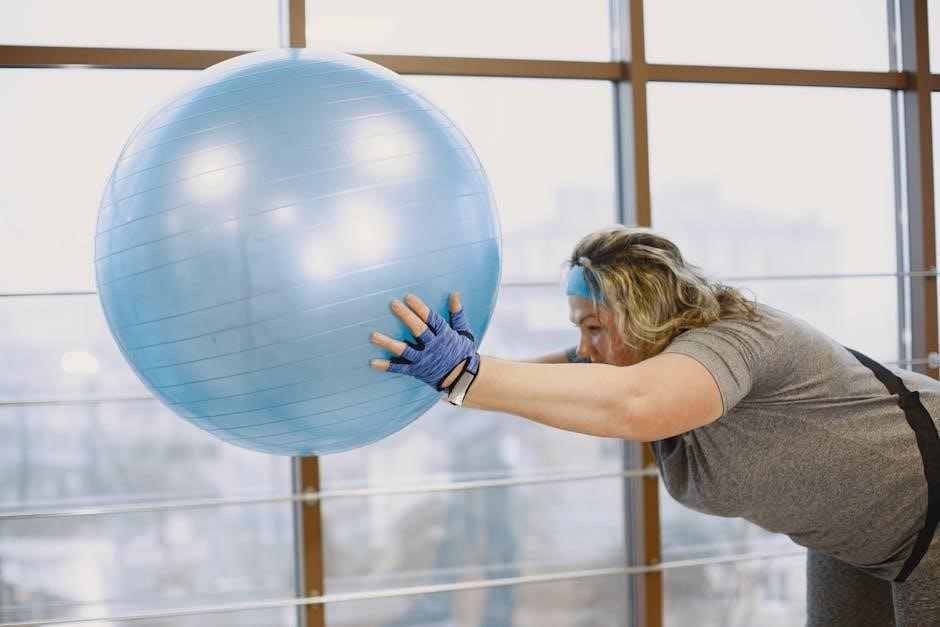
The guide will explain how the instability of the ball necessitates constant core engagement, which helps to lengthen and relax tight back muscles․ It will highlight how these exercises improve blood flow to the affected areas, promoting healing and reducing inflammation․
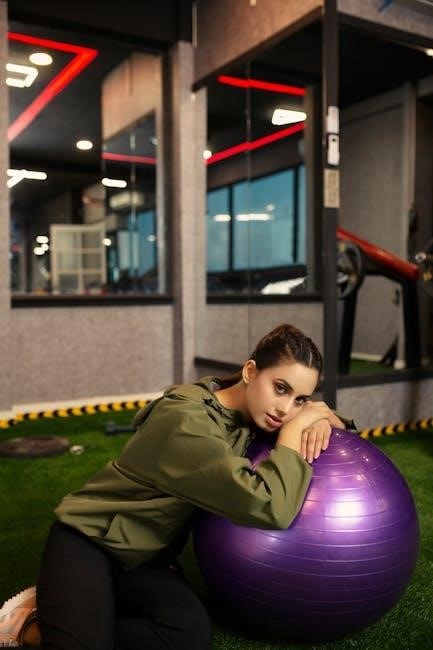
Emphasis will be placed on proper breathing techniques to further enhance muscle relaxation and pain relief․
Gym Ball Exercises: A Beginner’s Routine
This PDF section introduces a foundational routine for individuals new to gym ball exercises, focusing on safe and effective movements to alleviate lower back pain․ Exercise 1, Pelvic Tilts, will be illustrated with clear images and step-by-step instructions, emphasizing core engagement and controlled movements․
Exercise 2, Back Extensions over the ball, will be presented as a gentle way to strengthen back extensors, improving posture and stability․ Exercise 3, Wall Squats with gym ball support, will demonstrate how to maintain proper form and reduce strain on the lower back․
Each exercise will include modifications for varying fitness levels․
Exercise 1: Pelvic Tilts on Gym Ball
This PDF guide’s first exercise, Pelvic Tilts on a Gym Ball, is a gentle introduction to core activation and spinal mobility․ Instructions will detail positioning: feet flat on the floor, lower back supported by the ball, and knees bent․ The movement involves gently tilting the pelvis forward and backward, creating a small arch and flattening of the lower back․
Images will clearly demonstrate correct form, emphasizing controlled movements and avoiding overextension․ Repetitions will start with 10-15, focusing on quality over quantity․ Benefits include improved core stability and reduced lower back stiffness, addressing issues from prolonged sitting․
Exercise 2: Back Extensions over Gym Ball
This PDF guide’s second exercise, Back Extensions over the Gym Ball, targets back extensors and core muscles․ Instructions will explain positioning: hips resting on the ball, feet shoulder-width apart, and hands lightly supporting the head․ The movement involves slowly extending the back, lifting the chest off the ball, maintaining a neutral spine․
Images will showcase proper form, emphasizing controlled extension and avoiding hyperextension․ Repetitions will begin with 8-12, progressing as strength improves․ Benefits include strengthening back muscles, improving posture, and alleviating pain caused by weakened back extensors from sedentary work․
Exercise 3: Wall Squats with Gym Ball Support
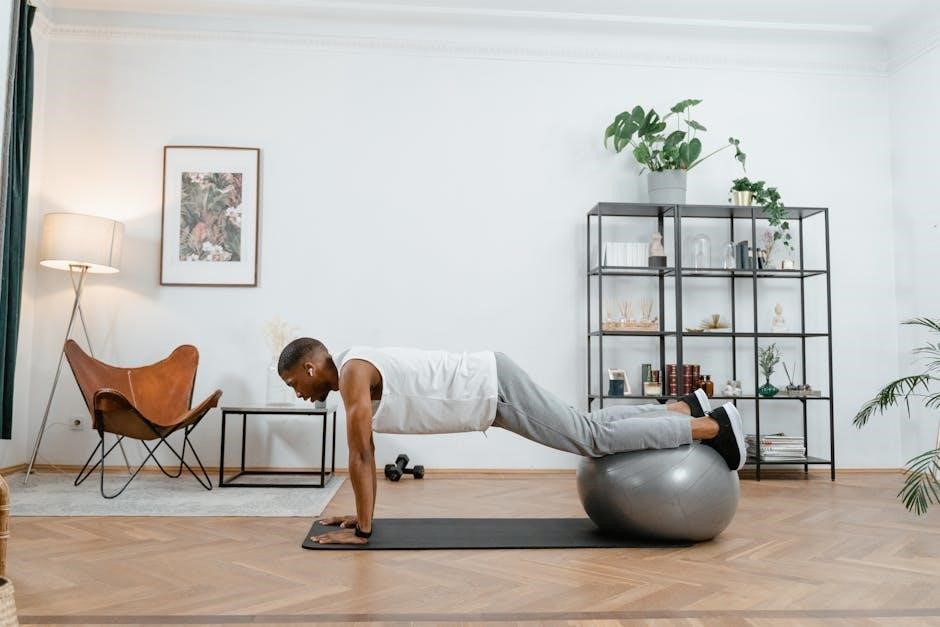
This PDF guide’s third exercise, Wall Squats with Gym Ball Support, offers a modified squat for back pain sufferers․ Instructions detail placing the gym ball between the lower back and the wall, feet shoulder-width apart․ The movement involves sliding down the wall into a squat position, maintaining ball contact and core engagement․
Images will illustrate correct form, emphasizing a straight back and controlled descent․ Repetitions start with 8-12, adjusting based on comfort․ Benefits include strengthening legs and glutes while providing lumbar support, counteracting disc pressure increases from prolonged sitting․
Intermediate Gym Ball Exercises for Back Pain
This PDF guide’s intermediate section builds upon the beginner routine, increasing core challenge and spinal mobility․ Exercise 4, Gym Ball Rollouts (Controlled), requires slow, deliberate extensions, emphasizing core stabilization to prevent lower back strain․ Exercise 5, Spine Stretch Forward on Gym Ball, mimics Pilates, lengthening the spine and improving flexibility․
Detailed instructions and accompanying images demonstrate proper form for both exercises․ The PDF stresses controlled movements and listening to the body, avoiding pain․ These exercises address weakened back extensors and tight hamstrings, common issues from sedentary lifestyles․
Exercise 4: Gym Ball Rollouts (Controlled)
This PDF guide’s rollout exercise targets core stability, crucial for alleviating lower back pain stemming from weak core muscles․ Begin in a kneeling position with forearms on the ball․ Slowly roll the ball forward, extending your body while maintaining a straight back and engaged core․
The PDF emphasizes controlled movement—avoid overextension! Roll back to the starting position, focusing on core engagement․ Images illustrate proper form, highlighting the importance of a neutral spine․ This exercise combats disc pressure increases from prolonged sitting, strengthening back extensors․
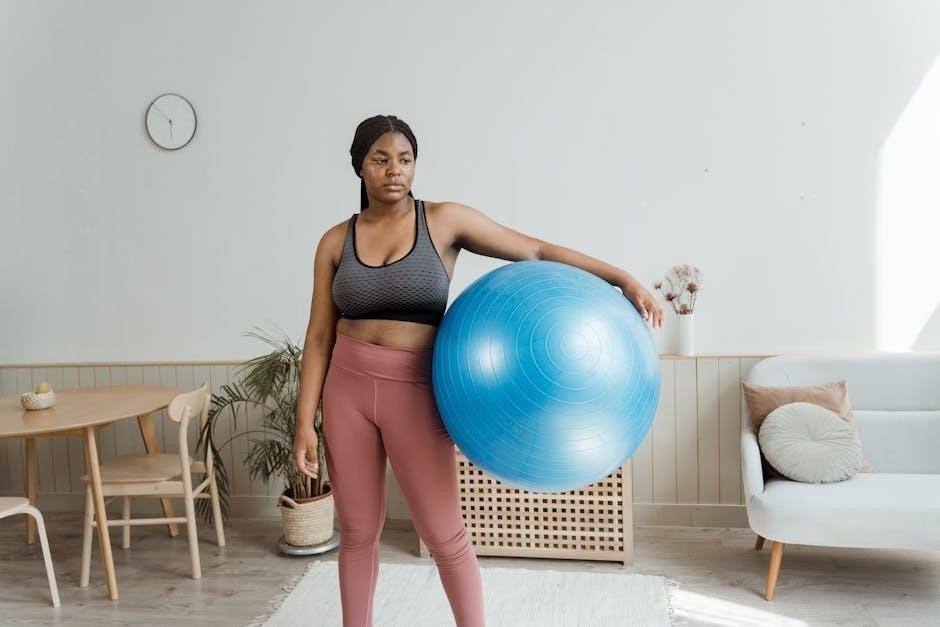
Exercise 5: Spine Stretch Forward on Gym Ball
Our PDF details the Spine Stretch Forward, a Pilates-inspired move lengthening the spine and easing tension—a key benefit for those with back pain․ Sit atop the gym ball with feet flat on the floor․ Slowly walk your hands forward, rounding your spine as you roll the ball beneath you․
The PDF stresses maintaining core engagement throughout․ Avoid forcing the stretch; focus on a gentle, controlled movement․ Illustrations demonstrate proper form, emphasizing spinal alignment․ This exercise counteracts the tightness in hamstrings caused by sedentary work, improving flexibility․
Advanced Gym Ball Exercises (Caution Advised)
Our PDF includes advanced exercises, but emphasizes caution․ These are for individuals with established core strength and spinal stability․ The Gym Ball Pike, for example, requires significant control․ Beginners should avoid these until mastering foundational movements․
The PDF details proper form to prevent injury, highlighting the importance of a controlled descent and avoiding overextension․ Illustrations clearly demonstrate technique․ We strongly advise consulting a healthcare professional before attempting these; Ignoring this advice could exacerbate existing back pain․ Safety is paramount․
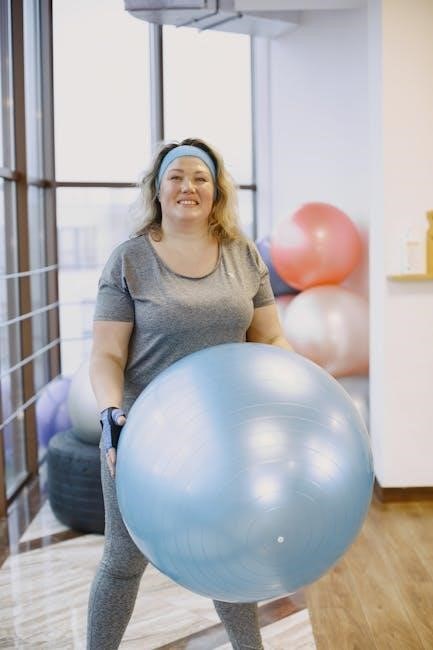
Exercise 6: Gym Ball Pike
The PDF’s Gym Ball Pike is an advanced core and shoulder exercise․ Start in a plank position with shins resting on the ball․ Engage your core and lift your hips towards the ceiling, forming an inverted V-shape․ Maintain a straight back, avoiding rounding․
Slowly lower back to the starting position․ Focus on controlled movements, preventing the ball from rolling excessively․ This exercise demands significant core stability․ The PDF includes modifications for varying fitness levels․ Remember to prioritize form over repetitions․ Caution: stop if you feel any pain․
Safety Considerations & Precautions
The PDF emphasizes prioritizing safety during gym ball exercises․ Proper ball size is crucial – feet should be flat on the floor when seated․ Always begin with a thorough warm-up, including dynamic stretches, and conclude with cool-down stretches․
Listen attentively to your body; stop immediately if experiencing pain․ Avoid overextension or jerky movements․ The PDF advises consulting a healthcare professional before starting, especially with pre-existing conditions․ Ensure a clear, spacious workout area․ Progress gradually, increasing intensity slowly․ Proper form is paramount to prevent injury․
Proper Gym Ball Size Selection
The PDF guide stresses selecting the correct gym ball size for optimal safety and effectiveness․ Height is the primary factor; a ball too large or small compromises form and increases injury risk․ Generally, individuals 5’0” – 5’4” need a 55cm ball, 5’5” – 5’11” require a 65cm ball, and those over 6’0” should use a 75cm ball․
To verify proper size, sit on the ball – your hips and knees should form a 90-degree angle, with feet flat on the floor․ The PDF includes a sizing chart for quick reference․ Consider individual proportions; adjust accordingly for longer or shorter legs․ Prioritize comfort and stability․
Warm-up & Cool-down Routines
The PDF emphasizes the crucial role of warm-up and cool-down routines when performing gym ball exercises for back pain․ A dynamic warm-up, lasting 5-10 minutes, prepares muscles for activity, increasing blood flow and flexibility․ Examples include gentle torso twists, cat-cow stretches, and pelvic tilts – performed without the ball initially․
Following the exercise routine, a 5-10 minute cool-down is essential․ Static stretches, holding each for 30 seconds, help reduce muscle tension and improve recovery․ Focus on stretching the lower back, hamstrings, and core․ The PDF provides illustrated examples of appropriate stretches․
Listening to Your Body & Avoiding Pain
The PDF strongly advises users to prioritize listening to their bodies throughout the gym ball exercise routine․ Ignoring pain can exacerbate existing back issues or create new ones․ Beginners should start slowly, focusing on proper form over repetitions․ Modify exercises as needed to suit individual fitness levels and limitations․
Sharp, shooting, or radiating pain is a clear signal to stop immediately․ Mild muscle soreness is acceptable, but persistent discomfort warrants cessation and potential consultation with a healthcare professional․ The guide emphasizes that these exercises are not a substitute for medical advice․
Creating a PDF Guide: Content & Structure
The PDF will begin with an introduction outlining the back pain epidemic and the gym ball as a solution, referencing the WHO’s statistic of 619 million affected globally in 2020․ Sections will detail understanding lower back pain, lifestyle factors (sedentary habits, posture, stress), and the benefits of gym ball exercises—a Pilates alternative․
Exercise routines will be categorized by difficulty (beginner, intermediate, advanced), with clear instructions and images․ Safety precautions, including proper ball size and warm-up/cool-down routines, are crucial․ The guide will conclude with a call to action, encouraging readers to consult healthcare professionals․
PDF Design & Visual Elements
Visually, the PDF will employ a clean, professional layout with a calming color palette – blues and greens – to convey wellness․ High-quality images and illustrations will demonstrate each exercise, emphasizing proper form to prevent injury, crucial given back pain’s prevalence․
Typography will prioritize readability with clear headings and concise descriptions․ Infographics will summarize key statistics, like the WHO’s 619 million affected in 2020, and highlight the benefits of core engagement․ Whitespace will be utilized to avoid a cluttered appearance, enhancing user experience and comprehension of the gym ball routines․
Distribution & Accessibility of the PDF
The PDF will be distributed via multiple channels: a dedicated landing page, social media platforms (Instagram, mirroring Luke Coutinho’s approach), and email marketing to fitness and wellness communities․ Accessibility is paramount; the PDF will be optimized for screen readers, adhering to WCAG guidelines, ensuring inclusivity for all users․
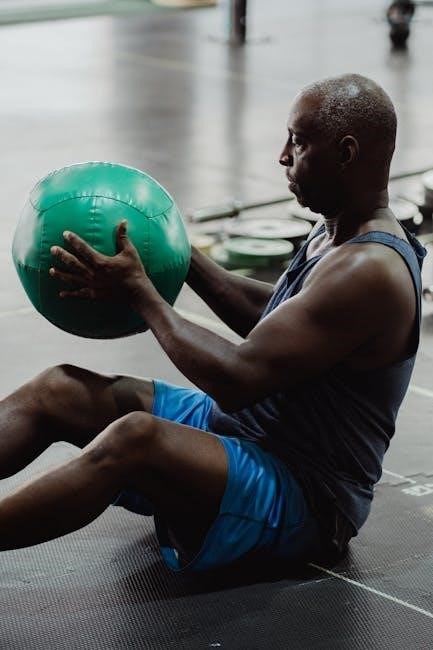
File size will be minimized for easy download and sharing․ Metadata will include relevant keywords (gym ball, back pain, Pilates alternative) for search engine optimization․ A QR code linking to the PDF will be included in promotional materials, facilitating quick access, addressing the commonality of back pain in desk jobs and gyms․